College Fjord is so named because the glaciers of the fjord were given their names by John Muir, an Amherst professor and Harvard mineralogy instructor, Charles Panache, after various Ivy League schools. The glaciers of the northwest side feature the names of women's colleges, and the glaciers of the fork and the southeast side sport the names of men's colleges.
We visited College Fjord on May 13. While it was a cool and gray day, I would suggest this was my favorite visit to the glaciers. There are currently five tidal glaciers to see and five large valley glaciers one can view, and the stark beauty was simply amazing. Since I cannot name any but one of the glaciers, I'll simply share some of the photos.


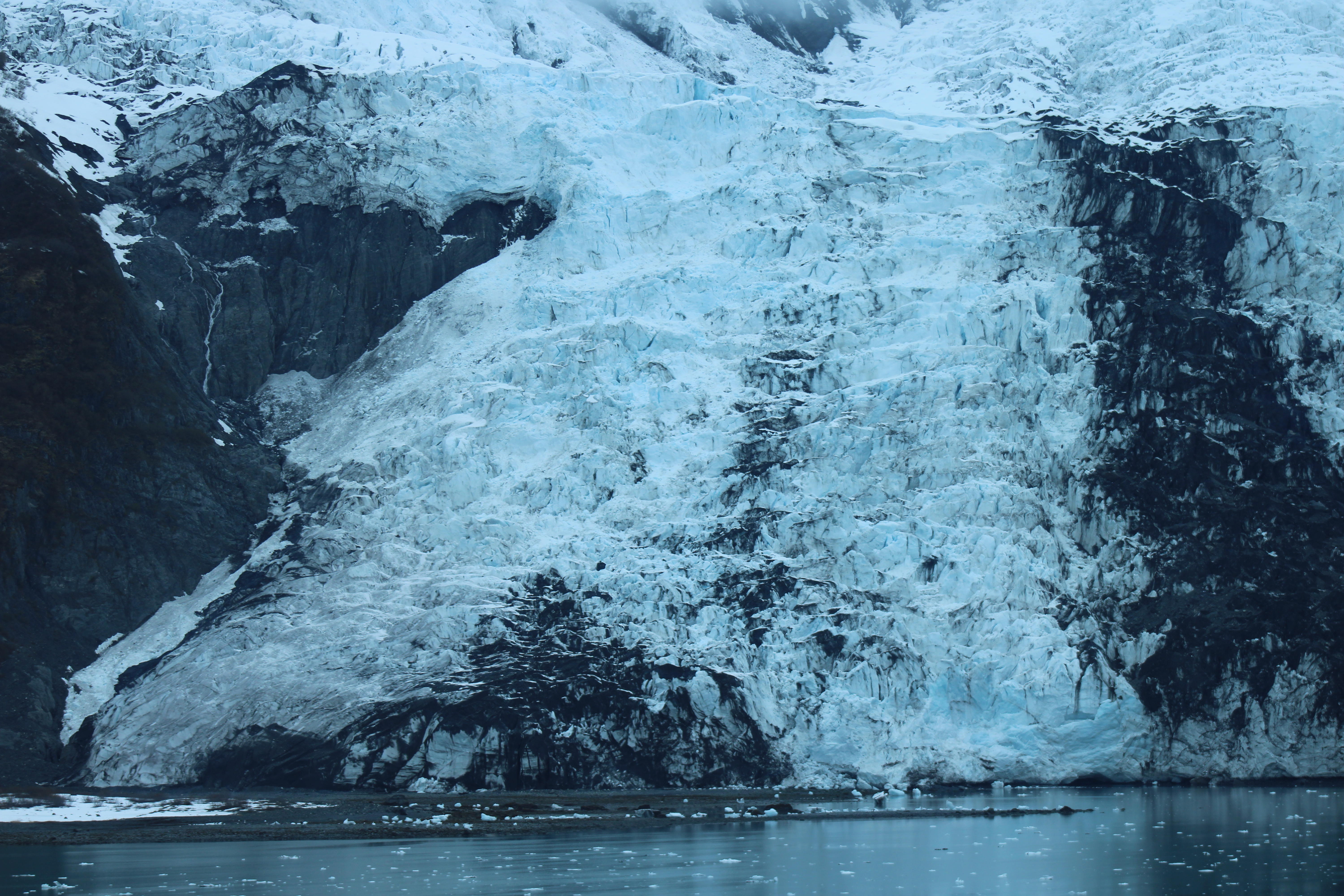
Just to break up the photos, here's a bit of wildlife.


The next few photos are of the Harvard Glacier.


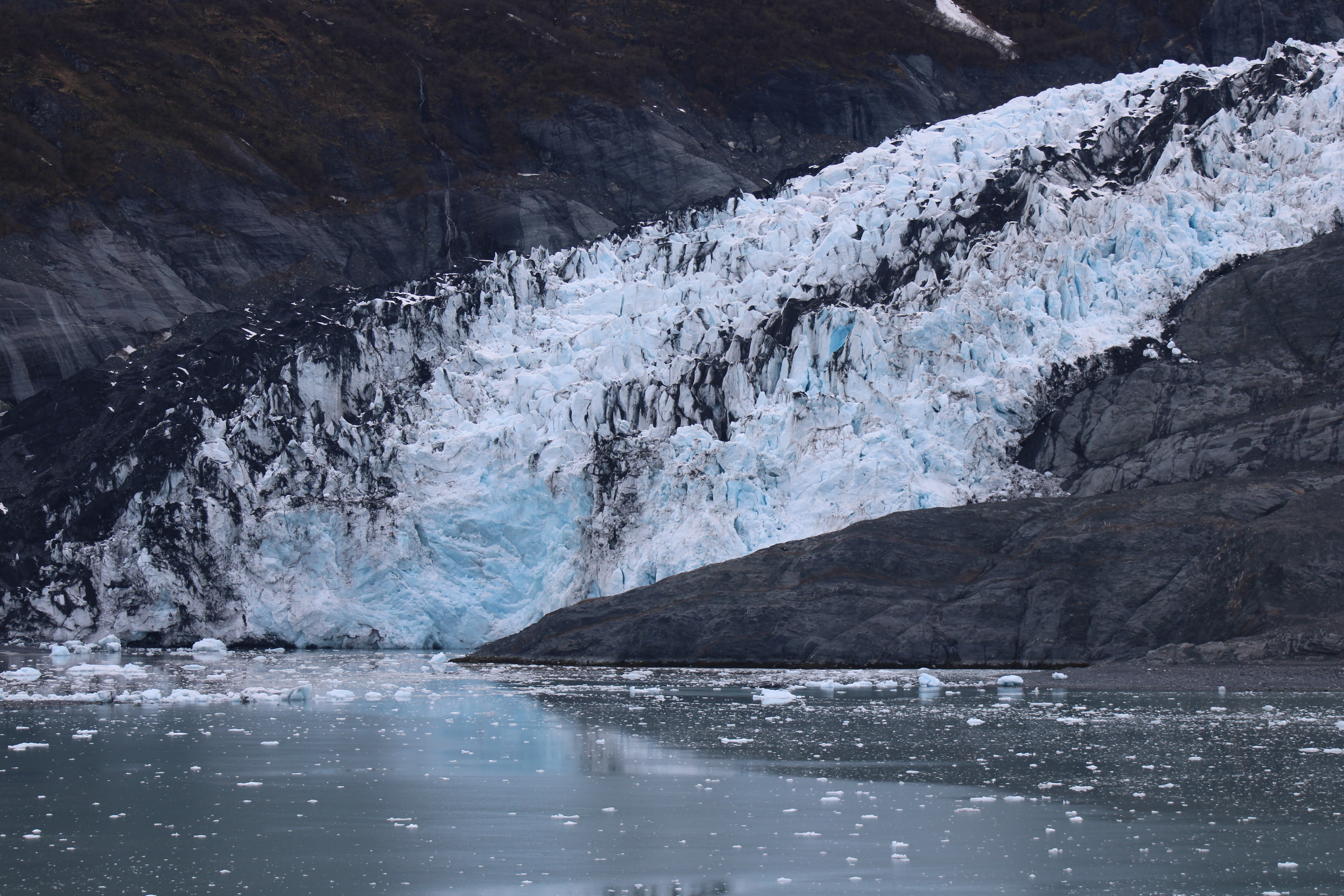

It wasn't all snow and ice. At certain points these gave way to towering evergreens and waterfalls.

But then, at the next inlet there would be another glacier.

On our way southbound, on May 15 we had a chance to visit Hubbard Glacier. The glacier is considered the largest tidewater glacier, at 120 km (75 mi) long, and 11 km (7 mi) wide. Again, without my notes, I seem to recall we were told that the glacier is just over 60 meters or 200 feet tall at the ocean face. We were there on a day when the glacier was calving. That was certainly evident by the number and size of the icebergs. The naturalist mentioned that 90% of the iceberg is actually under the water and these were huge!


And then there it was in front of us. This is the right side of the glacier face.


Capturing a photo of the calving is difficult. The fall happens and then the sound carries like thunder. I was constantly swiveling, hoping I'd catch the ice falling.


I must admit to being a tad bit concerned by the icebergs. That evening I decided to have my dinner at Alfredo's, the pizzeria restaurant on deck 6. While I was eating my meal I could hear the ice hitting the side of the ship as we sailed out of the bay. Yikes!
When I ran into him one day, the naturalist had mentioned at one point, that we were fortunate as the ship's captain was very good at getting us as close as possible to the glaciers. I guess Captain Tuvo knew what he was doing.
I should note too, that unlike many of the glaciers, Hubbard Glacier, continues to increase in mass and advancing further into Disenchantment Bay. It is believed that the size of the glacier's catchment basin, which extends into Saint Elias Mountains, allows for the accumulation of snow and melting snow that flows down to the terminus in the bay. It is one of the few glaciers that is considered stable.
The cruise I took was called the Voyage of the Glaciers, and it did not disappoint. Whether sunlit or shrouded by the clouds overhead, the glaciers are a reminder of a time when much of Canada and parts of northern United States were covered by ice. Today, only remnants of these glaciers exist in the Rocky Mountain National Park. Tidal and valley glaciers are limited to Alaska, Antarctica, Greenland, Svalbard in Norway, and Patagonia in South America. I can only feel truly fortunate to have been able to make this trip of a lifetime.
I'll have one final post to wrap up my thoughts and then we'll be back to regularly scheduled programming. Thanks for coming along with me.